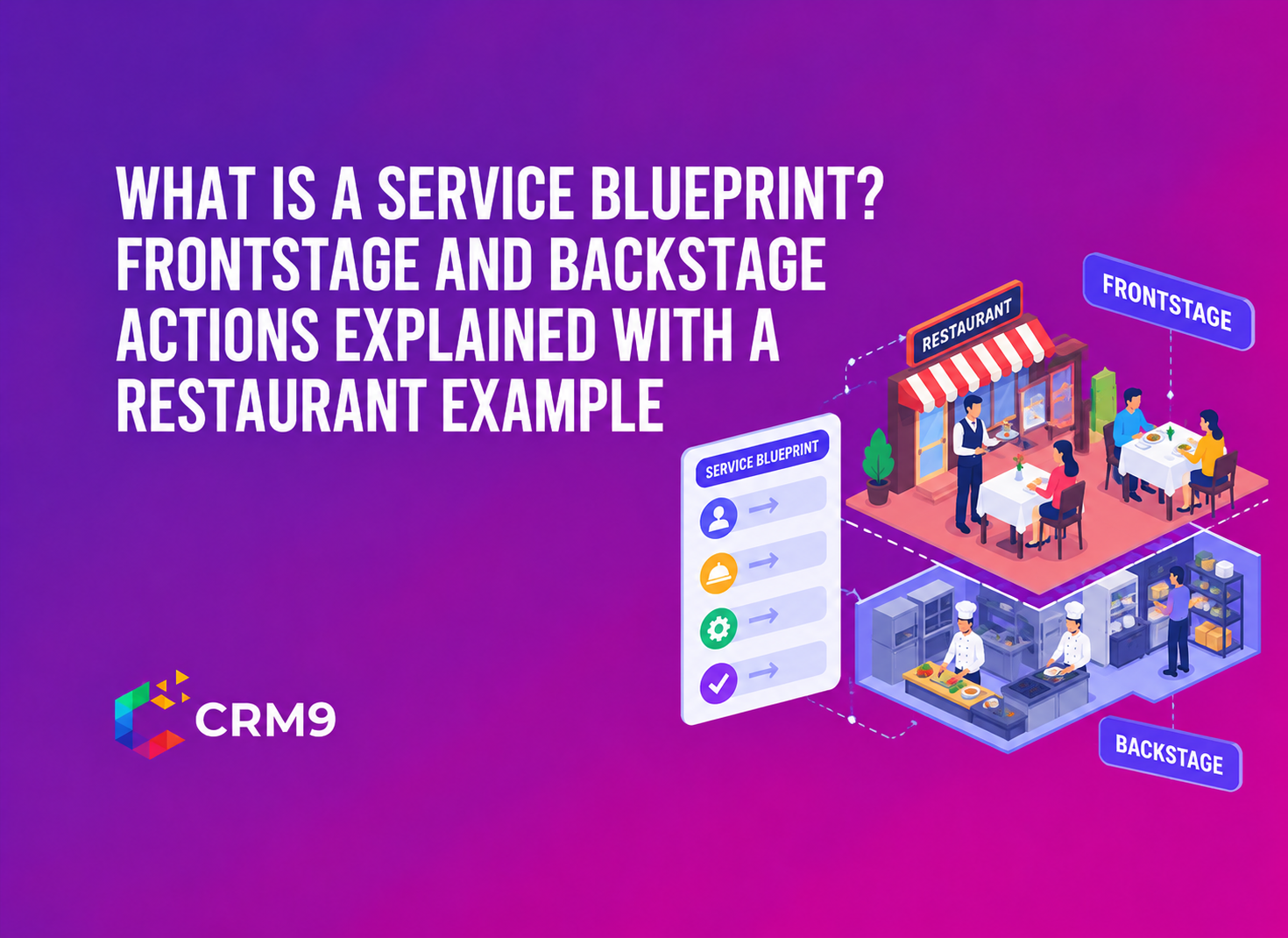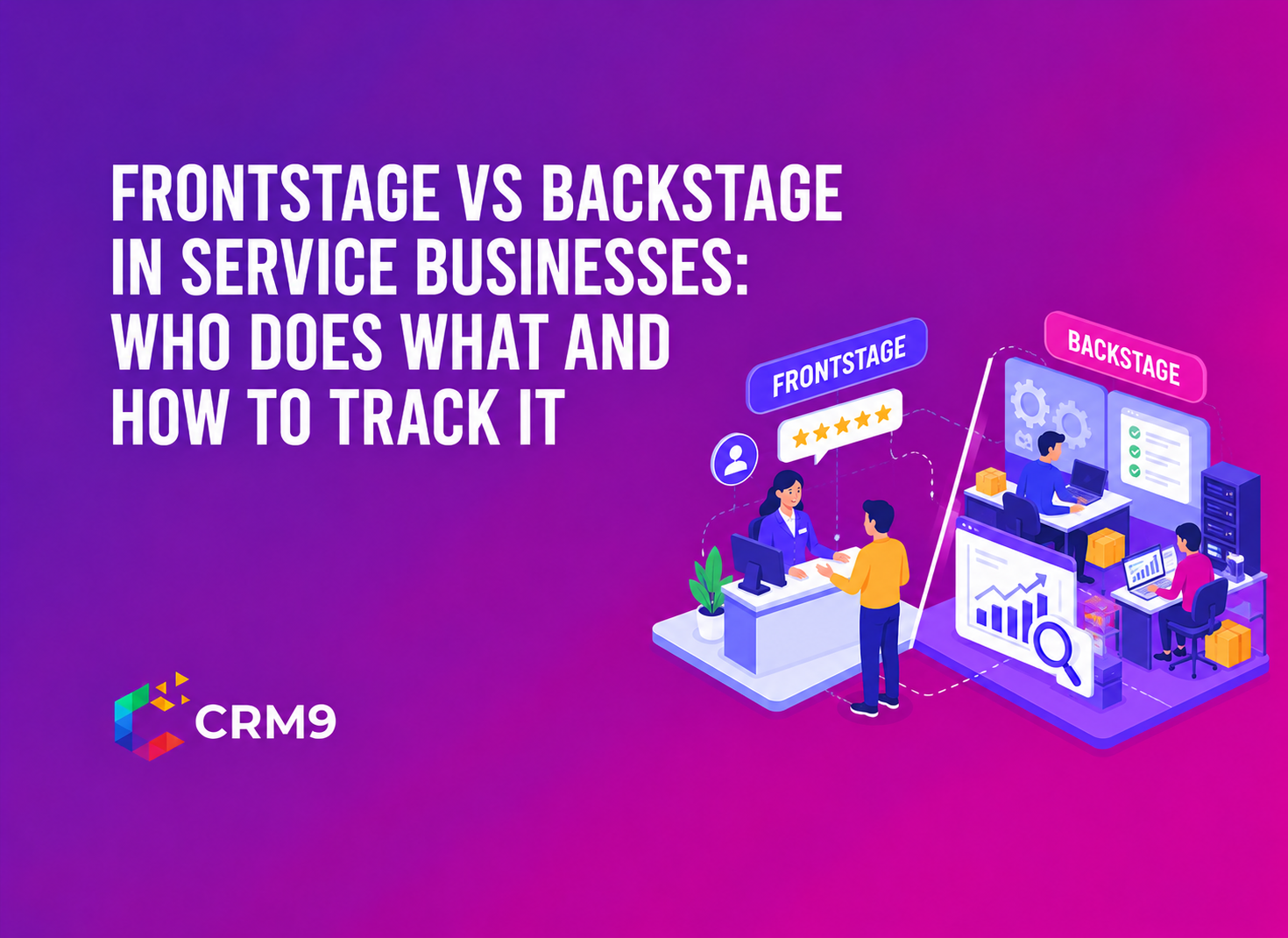
Ask a hotel guest who made the stay pleasant, and they will name the receptionist. They will rarely name the housekeeper who finished the room before check-in. Both did real work, but only one was visible. That gap sits at the heart of frontstage vs backstage in any service business.
Let’s explore the frontstage vs backstage difference, who does what on each side, and where handoffs usually break. It also shows a practical way to track backstage work with task management and a few simple records, so small problems do not reach your customers.
Frontstage vs Backstage: What Is the Difference?
In simple terms, frontstage is the part of a service the customer sees and participates in. Backstage is the work behind it. The customer experiences both but sees only one. The table compares frontstage vs backstage across five points.
| Point | Frontstage | Backstage |
| Customer visibility | Visible | Hidden |
| Typical work | Greeting, advising, serving, billing at the counter | Preparing, checking, scheduling, record keeping |
| Main skill | Communication and patience | Accuracy and coordination |
| Main pressure | The customer’s mood and waiting time | Deadlines and dependencies on other teams |
| How the customer judges it | Directly, through the interaction | Indirectly, through the result |
Neither side works alone. Frontstage staff make promises, and backstage staff keep them. A client management system record helps here because it carries what was promised from one side to the other. If you want one diagram that places both sides on a single page, look at how a service blueprint maps them together.
What Is Frontstage and What Is Backstage? Everyday Examples
Examples make the split easier to see. In a bank branch, the teller counter is frontstage. The loan file review in the back office is backstage. In a salon, the stylist working on a client is frontstage, while the person who orders products and cleans the tools works backstage.
A coaching centre follows the same pattern. What is frontstage there? The counsellor who explains a course to a parent. What is backstage? The team that prepares the timetable and study material. In short, backstage covers every task the customer never watches but always feels.
Who Does What in Frontstage vs Backstage Roles?
The frontstage vs backstage split looks different in every business. The table shows three common ones.
| Business | Frontstage roles | Backstage roles |
| Restaurant | Host, waiter, cashier | Cook, kitchen helper, store keeper, accountant |
| Hotel | Front desk, concierge, bell staff | Housekeeping, maintenance, reservations team, accounts |
| Clinic | Receptionist, doctor during consultation, nurse at the bedside | Lab staff, billing team, records team |
Roles also overlap. A doctor answers questions during the consultation, which is frontstage. The same doctor reads patient records before the visit and dictates notes afterward, which is backstage. Keep that in mind when you assign responsibilities. A job title does not decide the side. The customer’s view of the action does.
Is Customer Support Frontstage or Backstage?
It depends on the task. A live chat or a phone call with a customer is frontstage. Ticket sorting, internal escalation, and checking records are backstage.
Digital services follow the same rule. An app screen or a booking page counts as frontstage because the customer sees it. The database that updates behind the screen is backstage, and so is the booking calendar, such as appointment scheduling software. If you are asking what is frontstage in a software business, the answer is anything the user sees or touches.
Why Do Problems Show Up Frontstage but Start Backstage?
Customers judge the service where they meet it. That is why a receptionist often takes the blame for problems that began elsewhere. Take a hotel guest who arrives at 1 pm for an early check-in. The room is not ready, so the front desk apologises.
The real cause may be that housekeeping never learned about the early arrival, or that nobody updated the room status. A team activity log would show whether anyone acted on the booking note. This is why a better apology does not fix the problem. The fix lives in the handoff between the two sides.
Does Frontstage or Backstage Affect Customer Satisfaction More?
Both do, in different ways. Frontstage shapes the first impression and the tone of the visit. A warm greeting makes a customer more patient. Backstage decides whether the promise holds. A warm greeting cannot save a cold meal or an unclean room.
For this reason, the frontstage vs backstage debate misses the point. Strong customer service needs both sides to work from the same information. When one side improves and the other stays the same, the customer still feels the weaker one.
Where Do Frontstage and Backstage Handoffs Usually Break?
Most failures happen at four points where one side passes work to the other.
- Information gets lost. A special request, such as a food allergy or a late arrival, never reaches the people who need it.
- Nobody owns the step. Everyone assumes someone else will act.
- The timing slips. The backstage team finishes after the customer has already waited.
- No record exists. Nobody can tell what was done, by whom or when, so the same mistake returns.
Each of these is a tracking problem, not a people problem. Clear owners, a shared record and quick internal chats and messages fix most of them.
How Can You Track Backstage Work Without Slowing the Team?
Tracking should feel like a shared checklist, not surveillance. Start small and add detail only where problems repeat.
First, give every backstage step an owner and a due time. Task management lets a manager assign each job to a person, such as preparing a room or checking stock before the dinner rush. A custom dashboard then shows what is open, done or late in one view.
Second, protect the timing. Task reminders alert the owner before a step slips. This matters most for jobs with a hard deadline, like a room that must be ready by noon.
Third, keep customer details where both sides can see them. A client management system holds preferences, past visits, and special requests, so a note taken at the counter reaches the kitchen or housekeeping. For bookings, appointment scheduling software keeps reservations and time slots in one calendar.
Finally, record and communicate. A team activity log shows who completed which step, so you can trace a failure without blaming anyone. Internal chats and messages let frontstage and backstage staff clear doubts quickly, and a knowledgebase holds the written steps for new hires.
Should Frontstage and Backstage Teams Be Trained Differently?
Yes, but not in isolation. The frontstage vs backstage split changes what each person needs to learn. Frontstage staff need communication skills and quick access to customer information. Backstage staff need clear checklists, such as those kept in a knowledge base, and a view of how their work reaches the customer.
Cross-visits help most. Ask a waiter to spend an hour in the kitchen and a cook to spend an hour at the counter. Both return with a better view of the other side’s pressure points.
Recognition matters too. Backstage staff rarely hear customer praise. Share positive reviews with them, and name the backstage step that made the good experience possible.
Conclusion
The frontstage vs backstage difference is about visibility, not status. Customers see one side, but they rely on both. Ask yourself what is backstage in your own business, and who owns each task there. Then list your three most common complaints and trace each one back to the handoff behind it. Give that handoff an owner, a reminder, and a record. Small fixes like these usually do more for the customer experience than another apology at the counter.
Frequently Asked Questions
It is the part of a service that the customer sees and takes part in directly.
It is the work done out of the customer’s sight that makes the visible service possible.
Yes, a waiter serves a table frontstage and then enters the order into the system backstage.
The owner of that backstage step should fix it, while frontstage staff pass on the details quickly.
Use a shared task list with a named owner, a due time and a simple record of who completed each step.