In the best business plans, customer relationships are the foundation of lasting expansion. Trying to operate them with spreadsheets and hand tracking is not effective. Advanced software smartly structures information and enhances interaction.
So, what is a CRM platform? What is CRM in marketing? An elite CRM system is not merely a collection of customer data; it automates procedures and allows companies to provide a personalized customer experience at scale.
What is CRM (Customer Relationship Management)?
CRM, an abbreviation that means Customer Relationship Management, is a strategy and a system that is designed to enhance customer communication. The software allows companies to keep, monitor, and analyze the customers’ information in one place, hence facilitating communication and driving sales.
Today’s CRM applications also help companies manage leads and clients, track sales pipelines, and even manage invoices & estimates. Regardless of the size of your company, CRM applications allow all workers to utilize current data and make informed decisions.
What is CRM in Marketing?
In marketing, CRM is aimed at utilizing customer information to put into action more efficient and targeted campaigns. Rather than broadcasting the same promotion, businesses can segment their audiences and collect information through customer interactions.
For instance, in case a customer clicks on an email that explains a product, the CRM can trigger another campaign with a special promotion based on that particular client. This not only increases conversions but also increases brand loyalty. Essentially, CRM marketing is about converting data to relationships.
Pro Tip:
Make your CRM system Talk to marketing automation software so that your campaigns respond to customer behavior in real time. This might increase ROI by as much as 30%.
What is a CRM Platform?
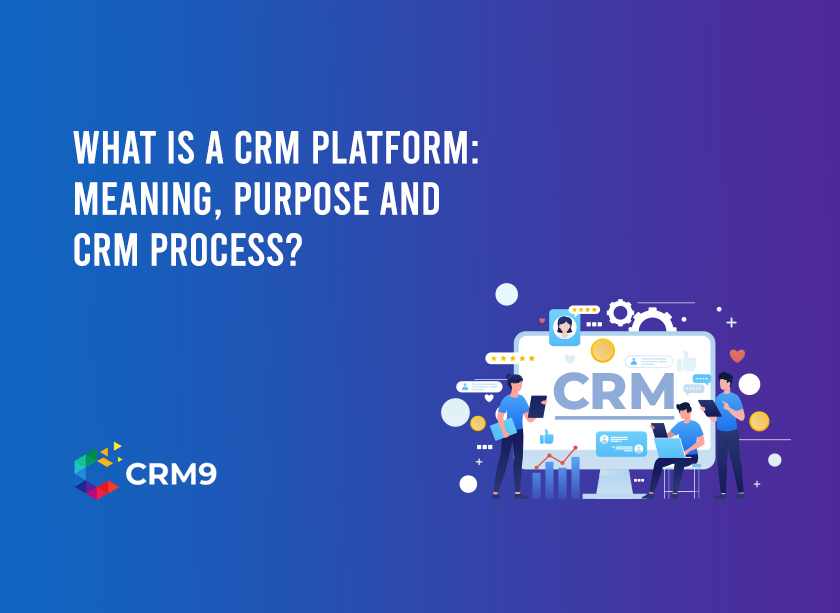
A CRM platform is the software that helps you implement your customer relationship management strategy. Imagine it as a central location where all your customer interactions, sales leads, and support requests are monitored.
The CRM platform meaning extends beyond maintaining customer information. It’s about enabling various teams (sales, marketing, and customer support) to collaborate by giving them a unified view of the customer. For instance, Salesforce, HubSpot, and Zoho are well-known platforms specially developed for CRM.
What is the Purpose of CRM?
The objective of CRM is simple: to build customer relationships and grow the business. Through centralized communication, workflow automation, and insight, CRM helps a business in the following ways.
- Deliver Personalized Customer Experiences.
- Monitor leads and convert them quicker.
- Streamline client handling and post-sales support.
- Unify marketing, sales and support teams.
- Make informed decisions with confidence.
Did You Know?
Firms implementing CRM tools recorded an increase in sales by 29%, productivity by 34%, and forecast accuracy by 42%.
Benefits of CRM Platforms in 2025
The CRM process is a collaborative function among the brand, marketing, sales, and customer support departments. 87% of customers appreciate businesses that have proactive solutions to problems, which improves customer satisfaction and loyalty. 80% of purchasers are likely to buy when brands provide a more customized customer experience.
1. Increase Sales Team Productivity
One of the benefits that CRM solutions can possess is that they can get rid of redundant and time-consuming processes. CRMs simplify the task management, lead allocation, and follow-ups, thereby minimizing the work done by sales teams and giving them a chance to create better relationships and close deals in a shorter time. Such optimization results in not only improved productivity but also in alignment of the sales plans with the customer requirements.
2. Interactive Data Dashboards with Actionable Analytics
The CRM systems available today give businesses real-time access to customer data and metrics in user-friendly dashboards. Known customer behavior patterns and important CRM systems provide business entities with the ability to develop reminders, renewals, and follow-up workflow. The automation builds more relationships, enhances satisfaction, and promotes retention by ensuring that no customer query or touchpoint is ignored. Performance indicators and sales funnels are displayed in a simple and visual format.
3. 360° View of the Customer
Full customer understanding is essential to the long-term success of a company. All the relevant customer information, including history of purchases, communication records, and likes, is brought together under a single profile with a CRM platform. This overall vision allows teams to interact with customers in a highly personalized environment, which ultimately leads to increased loyalty and trust.
4. Boost Productivity with AI-driven Tools
By the year 2025, AI has completely changed the functioning of CRMs. With predictive lead scoring, customer sentiment analysis, and smart chatbots being examples of AI-driven functions, the AI-driven features maximize engagement and minimize time to decision. Artificial intelligence (AI) can also support companies in anticipating customer needs and offering proactive solutions.
5. Integration with Other Systems
CRM systems do not function in isolation. Either it is lead management, client management, or invoice and estimates software. This internet of things allows the removal of silos and the establishment of a cross-departmental workflow. Such insights on decision-making enable the decision-makers to identify opportunities, eliminate bottlenecks, and optimize strategies.
6. Customer-centric Automation
The CRM systems today enable companies to get customer data and measurements instantly by accessing user-friendly dashboards. The behavior trends of customers, key performance and sales funnels are offered in easy-to-view and visual formats. Such insights of decision making enable decision-makers to identify opportunities, address bottlenecks and optimize strategies.
How Does the CRM Process Work?
The CRM process offers a systematic approach to the integration of all stages of the customer experience and avoids the possibility of missing opportunities or interactions. It allows companies to collect and analyze customer information to achieve better interactions and business advancement.
1. Data Collection
The first step would be to gather customer data from various sources such as email, websites, social media, calls, and even in-person communication. The research findings constitute the foundation of examining customers’ needs.
2. Lead Management
After leads are gathered, they are prioritized and qualified depending on how engaged and how valuable they are. With the help of a CRM system, sales representatives only concentrate on the best opportunities at any given time, conserving time and boosting efficiency.
3. Customer Engagement
At this stage, businesses leverage automation to deliver tailored communication. From personalized emails to targeted campaigns, the goal is to nurture leads and maintain consistent contact management.
4. Sales Conversion
Trained leads move along the sales pipeline towards a buying decision. Also, the software tracks each step of the sales cycle from proposal management to closing and all the intermediate steps, allowing customer acquisition to be easier.
5. Support & Retention
Customer relationship is not merely selling. CRMs provide capabilities for after-sales service, feedback gathering, and satisfaction monitoring. This focus on retention encourages and enforces repeat business. Finally, this is the way how CRM systems works.
Future of the CRM Platform:
Accelerated technology growth and increasing customer expectations foretell the way they will be in 2025 and beyond. Companies desire more than simple client management that CRM software can offer. They desire a smart, adaptable, and secure system that complements their workflow. The following are the major trends that characterize the future of CRM.
1. Intelligent CRM Automation
Automation is not limited to repetitive tasks anymore and now encompasses strategic-level decision-making. AI-powered CRM solutions will sense next best actions, anticipate customer actions, and refine sales strategies. Customer engagement becomes more efficient and data-based.
2. Mobile App CRM
Just as the workforce is becoming more mobile, so are CRMs. Mobile-first CRM applications will arm sales and support personnel with the capabilities needed to remain nimble and responsive at any time, from anywhere, by making it easy for them to access customer information, sales pipelines, performance metrics, etc.
3. AI Voice Assistants
Voice-activated CRM assistants will make employees more efficient. From scheduling follow-ups to maintaining records and responding to questions, AI voice tools will minimize manual input, speed, and accuracy.
4. Low-code Platforms
Customization is necessary, but not all businesses possess developers. The low-code CRM platforms will empower businesses to create workflows, dashboards, and integrations without much code knowledge and will allow teams to assume more control.
5. End-to-End Customer Journey Management
The future CRMs will map the entire journey of customers and not individual interactions. Businesses will also be in a position to offer a full experience by integrating customer communication in emails, social media, calls, and offline platforms into a single system.
6. Ethical AI and Data Privacy
CRM needs to be transparent and compliant as regulations increase and customers grow more motivated to be educated. Ethical AI practices are paired along with the data privacy programs to allow businesses to achieve trust and protect customer data.
Conclusion
By 2025, CRM platforms will be an indispensable component of an enterprise that is interested in staying competitive. These tools are fundamental in client management in the current business world, whether it is through improved interaction with customers or generating useful insights that can be acted upon. As a startup that needs to find out which platform is committed to CRM or an enterprise trying out AI-based tools, the correct CRM platform adoption can change the sales, marketing, and service approach.
Related Reads
- Sales Organization Structure: Types, Purpose & Hierarchy Explained
- What is Sales? Sales Meaning, Types, and Importance Explained (2025 Guide)
- Sales Analysis Explained: A Complete Guide to Sales Data and Trends
- Inbound vs Outbound Sales | Difference, Meaning & Strategies Explained 2025
- What is a Sales Plan? Process, Strategy & Templates Explained
- Inside Sales Explained: Meaning, Key Roles, and Responsibilities
- Sales Report: Easy Steps, Benefits & Excel Tips for Success
- What is Return on Investment (ROI) and ROI Calculation Formula in 2025?
CRM Platform FAQs:
Customer relationship management marketing solutions help to use customer information to perform targeted campaigns, track customer interactions, and maximize conversions. It ensures individualization, uniformity, and real influence.
Zoho CRM, HubSpot, and Freshsales are a few of the top CRMs for small businesses due to their affordability, scalability, and ease of use.
CRM is all about strategic management of customer relationships. As an example, a travel agency, through CRM, can track the behavior and preferences of customers, issue trip reminders automatically, and upsell and cross-sell products and services effortlessly.
It combines a number of tools and techniques to capture information about customers and interpret interactions. This amounts to enhanced interaction, expedited selling procedures, and increased retention.
Startups need affordable CRMs that allow organizing leads, automating client follow-ups, and tracking invoices with the expansion of the company.
The tool can close more deals and offer better customer service through the automation of the processes and a 360-degree view.