A client sends a message on Monday asking for a revised quote. One team member replies on WhatsApp, another updates a spreadsheet, and the invoice goes out with the old price. The client notices. Nobody made a serious mistake. However, the team handled the client’s information across different channels.
That handling has a name: client management system. Let’s discuss what client management is, why it matters for small businesses, and which stages it covers. It also shows where client details usually get lost, how to keep follow-ups consistent, and when a spreadsheet stops being enough.
What Is Client Management?
Client management is the way a business handles its clients from the first conversation to the last. It covers onboarding, communication, delivery, billing and renewal. The goal is simple: every client gets a consistent experience, whichever team member they speak to.
Sales usually ends when a client signs the agreement. However, client management continues throughout the relationship, from onboarding to renewal or exit. A related idea, client relationship management, looks at the relationship itself, such as trust and loyalty. Client management is the day-to-day handling behind it.
Freelancers, agencies, and consulting firms rely on client management because they often serve the same clients for months or years. For a freelancer, client management may be as simple as one notes file per client. For a firm of ten people, it needs shared records and clear owners. The principles stay the same, and only the tools change.
Why Does Client Management Matter for a Small Business?
Small businesses often depend on a short list of clients. Losing one hurts far more than it would for a large company. Good client management reduces that risk.
First, it protects repeat business. A client who feels remembered tends to renew and recommend you. Second, it saves time. When details sit in one place, nobody spends an hour searching old chats before a call. Third, it prevents avoidable errors, such as the wrong price on an invoice or a promise nobody recorded.
Client management also helps the owner step back. If only the owner knows the history of each client, the business cannot grow past the owner’s memory. Once a lead signs an agreement, the team should transfer their record from the lead management system to the client management process. This way, the team can continue the conversation without losing important details.
A simple test shows whether your handling works. Ask a team member who has never worked with a particular client to answer three questions: what the client bought, what was promised last, and who owns the next step. If they cannot answer within a few minutes, the information is scattered.
What Are the Stages of Client Management?
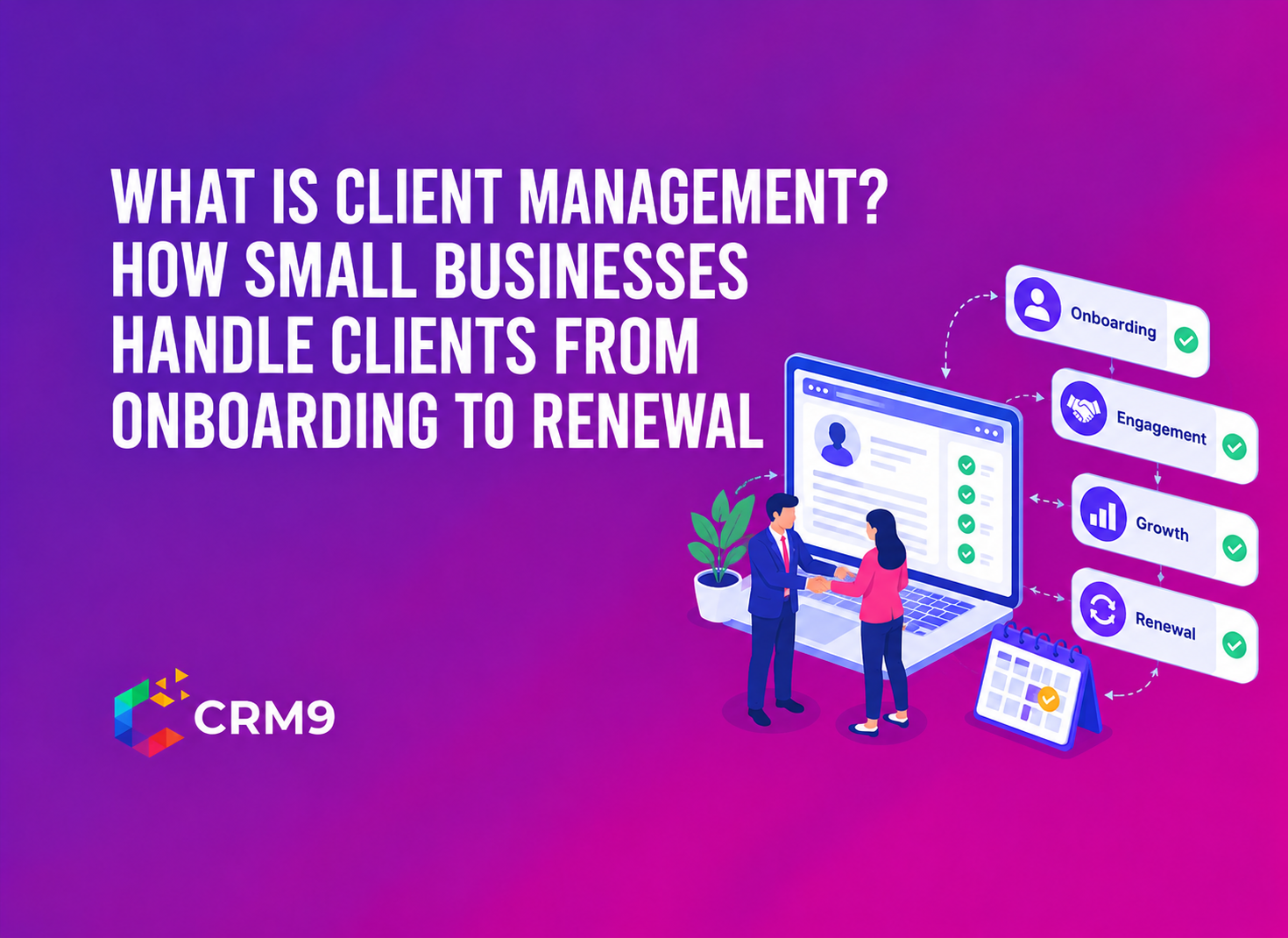
Most service businesses take each client through five stages. The names vary, but the work is similar.
| Stage | What happens | What to record |
| Onboarding | The team signs the agreement, collects client details, and sets clear expectations | Contact person, scope and start date |
| Communication | Regular updates, questions, and approvals | Date, topic and outcome of each conversation |
| Delivery | Work is done and reviewed | Tasks, deadlines and deliverables |
| Billing | Estimates, invoices and payments | Amount, due date and payment status |
| Renewal or exit | The contract is renewed, changed, or ended | Renewal date, feedback and reason for leaving |
Take onboarding as an example. A short checklist on day one prevents many later problems. Collect the right contact person, the approval process, and the preferred way to communicate. A proposal management system that records the agreed scope gives both sides something to refer back to.
Billing deserves its own stage because money questions strain relationships fast. Keep invoices and estimate records linked to the client, so anyone can answer a payment question quickly.
Consider a small accounting firm as an example. It onboards a new client by collecting details and agreeing a fee. Communication runs through a monthly call, and delivery means finishing the agreed work before each deadline. Billing follows each piece of work, and renewal comes up once a year. Each stage has a different owner and a different date, which is why a shared record helps.
Where Do Client Details Get Lost, and What Should You Record?
Client information rarely disappears. It scatters. Contact details sit in a phone, agreements in email, project status in a chat group, and payment history in a spreadsheet. Each place works alone. Together they make a client’s history impossible to see.
Details tend to get lost at three points. A team member leaves or goes on leave. A conversation moves from one channel to another. A verbal promise is never written down.
The fix is one profile per client. At a minimum, record the following.
- Who the main contact is, and who else approves decisions.
- What was agreed, including scope, price, and dates.
- Every conversation, with a one-line outcome.
- Open tasks, with a named person responsible for each.
- Invoices and their payment status.
For example, a business can keep contact details, notes, conversation history, documents, invoices, and proposals in one client management system profile. As a result, the entire team can access the same information.
Client records often hold sensitive details, such as contracts and payment information. Give access only to the people who need it, and review that list whenever someone joins or leaves the team.
How Do You Keep Communication and Follow-Ups Consistent?
Consistency matters more than frequency. Clients rarely mind a short update. They mind silence.
Agree on a rhythm with each client at the start. Weekly updates, a fortnightly call, or a monthly review all work, as long as the client knows what to expect and your team keeps to it.
Pick one main channel for each client as well. If the client prefers WhatsApp, use it, but copy the key points into the client record afterwards. That way the conversation does not stay trapped on one person’s phone.
Then turn promises into tasks. Whenever you promise a client a revised plan by Thursday, assign the task to a team member and set the deadline. Then, use task reminders to keep the work on schedule. Task reminders alert the owner before the date arrives, so a busy week does not become a missed promise.
Reply time is part of consistency too. Decide what a reasonable reply time is, perhaps one working day for routine questions, and share it with the client. A stated standard is easier to meet than an unspoken one.
Finally, review. Once a quarter, look at each key client and ask three questions. Is the work on track? Is the invoice cycle smooth? Has the client mentioned anything we have not acted on?
When Is a Spreadsheet No Longer Enough for Client Management?
A spreadsheet is a sensible start. Switch when keeping it accurate begins to cost more than a tool would.
- Two people have updated the same client record, and the versions differ.
- You cannot say at a glance which clients are waiting for a reply.
- Preparing a proposal or invoice means copying details from three places.
- A client has repeated information they already gave you.
Client management software helps small businesses keep every client detail in one place. Therefore, team members can find contact information, tasks, and previous conversations without searching multiple tools.
Look for a tool that matches the stages above, and ask whether your team will use it daily. Whichever client management software you choose, write the process first. A tool works best when it follows steps your team already understands.
If you want a closer look at features and options, our guides on what a client management system is and the client management system cover that side.
Conclusion
Client management is a habit more than a system. Pick your five most important clients this week. Build a profile for each, record the agreement, the last conversation and the next action, and set a reminder for it. Once that routine feels natural, extend it to every client. Plan the move carefully. Clean your client list before you import it, remove duplicates, and decide who owns the data. Importing a messy sheet into a new tool only moves the mess to a new place.
Related Reads
- Top Emerging Sales Trends for 2026: What’s Changing in Sales Management
- What Is a CRM Platform? Features, Benefits, Types and How It Works
- What Is a Sales Budget? Purpose, Format, and How to Build One
- Sales Organization Structure: How It Should Evolve as Your Team Grows
- To-Do List or Task Management Software? When a Simple List Stops Being Enough
- What Is Sales Promotion and Why Do Smart Brands Keep Running Them?
- Inside Sales: Roles, Responsibilities, and Strategies for Better Results
- Inside Sales vs Outside Sales: Which Model Fits Your Business Better
- Custom Dashboard Software for Small Teams: What to Track and How to Set One Up
- How to Manage Customer Subscriptions: Tracking Renewals, Payments and Plan Changes
Frequently Asked Questions
It is how a business handles its clients from onboarding to renewal, so every client gets consistent service.
The main stages are onboarding, communication, delivery, billing, and renewal or exit.
Client management usually covers ongoing, service-style relationships, while customer management often covers one-time or high-volume buyers.
Log each conversation in one client record with the date and a one-line outcome.
Yes, a simple profile for each client and a reminder for every promise covers most needs.