You spend two evenings on a proposal, send it on a Friday, and hear nothing. By the following Thursday, you cannot remember whether the client opened it, who was meant to follow up or which price you quoted. The work was good. The proposal management around it was missing.
This guide follows a proposal from start to finish. It explains what proposal management means, how to write a proposal for a client, where proposals stall, and how to track them. It also shows how a proposal connects to contracts, invoices and your wider client management routine, and when software is worth using.
What Is Proposal Management?
Proposal management is the process of creating, sending, tracking sales, and following up on proposals until the client says yes or no. It covers more than writing. It also covers who owns each proposal, which version went out, when the client last replied, and what happens after an acceptance.
The term has two common meanings. In large companies, it often refers to managing long bid documents, such as responses to formal tenders. For most small and mid-sized businesses, it means sales proposals: the document you send after a discovery call to explain what you will do, how long it will take and what it will cost.
A spreadsheet, a shared folder or an email thread can handle a few proposals. Once several are open at the same time, you need a consistent process. Many teams then add proposal management software to keep proposals from slipping.
How Do You Write a Proposal for a Client?
Writing a proposal gets easier when you treat it as the answer to one question: what does this client need, and how will you deliver it? Before you write anything, reread the emails, call notes, and forms the client has shared. A proposal that clears the client’s own words reads as tailored. One that does not reads as a template.
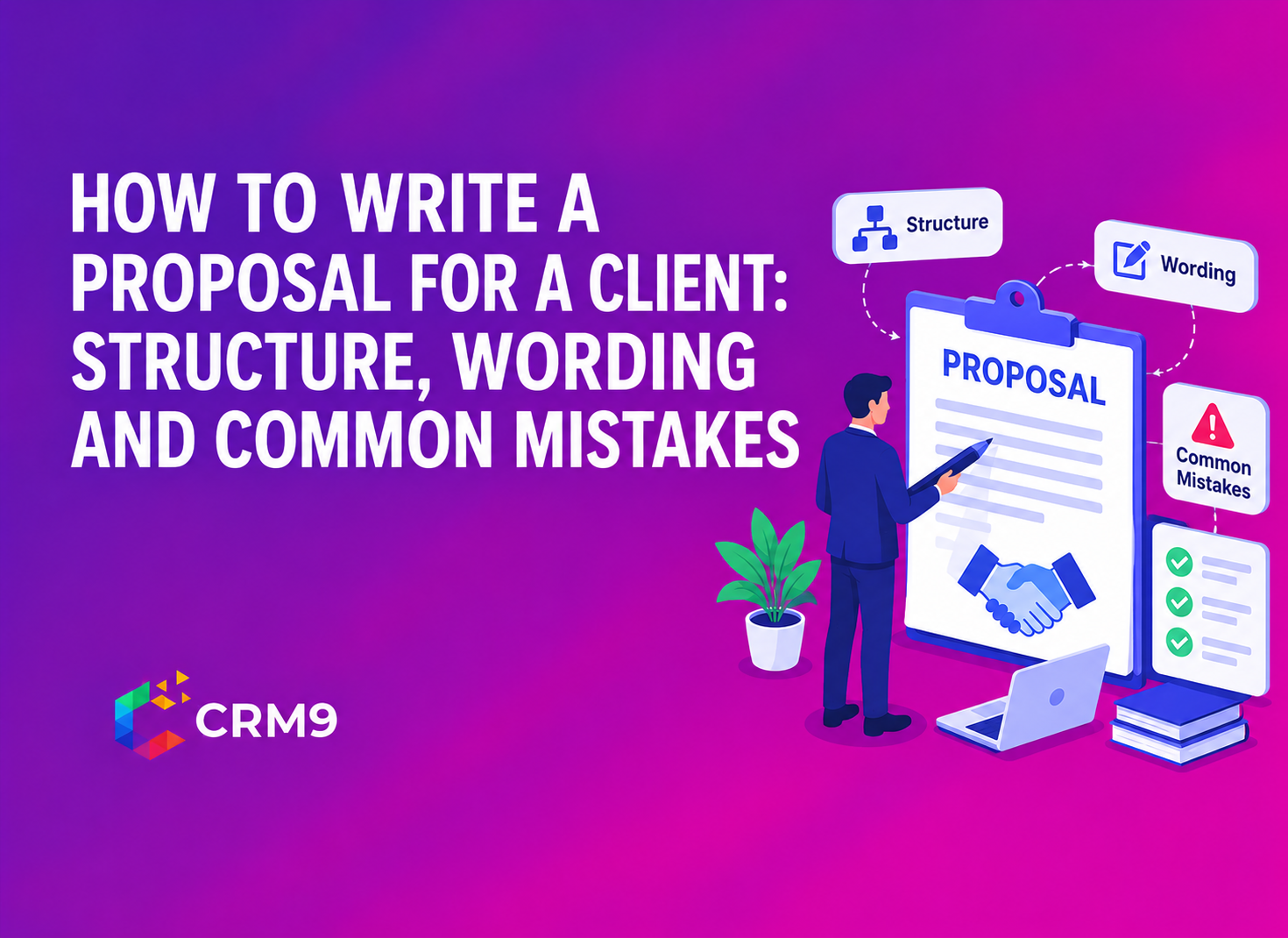
A proposal for a client usually follows this order.
- Cover Page: Your name, the client’s name, the project title, and the date.
- Summary: Two or three sentences that restate the client’s problem and your proposed answer.
- Scope and Deliverables: Exactly what you will do, and what falls outside the scope.
- Timeline: Key dates or phases, with the client’s responsibilities marked.
- Pricing: A clear breakdown, plus payment terms.
- Proof: A short example of similar work, if you have permission to share it.
- Next Step: How to accept, who to contact, and how long the offer holds.
Keep the language plain. Clients decide faster when they can see the price, timeline, and next step without searching for them. If you are learning how to write a proposal that people read to the end, keep the summary short and place the detail after it.
Pricing needs extra attention. Show what the client gets for each amount, and consider offering two or three options so the client can choose a level instead of simply saying yes or no. Always state how long the price stays valid.
Teams that send many proposals should keep approved wording, pricing tables, and case descriptions in a shared knowledge base. That way, a new team member does not rewrite your terms from memory.
Where Do Proposals Usually Stall After You Send Them?
Many proposals do not fail because of the offer. They stall in the days after sending, when nobody owns the next move. Four gaps appear again and again.
- Nobody knows whether the client has opened the proposal.
- The follow-up depends on one person’s memory, and that person is busy or away.
- Several versions circulate, and the client asks about a price that has since changed.
- The client says yes in a message, but nobody turns that yes into a contract or an invoice.
Each gap is a process problem, not a sales problem. Picture a small design studio that sends six proposals in a week. Three clients reply quickly. The other three go quiet, and the studio only notices a fortnight later because nobody had a date to check.
The fix is to give every proposal an owner, a status, and a next date. A task reminder alerts that owner before the date passes, so a quiet Friday does not become a lost deal.
How Do You Track and Follow Up on a Proposal?
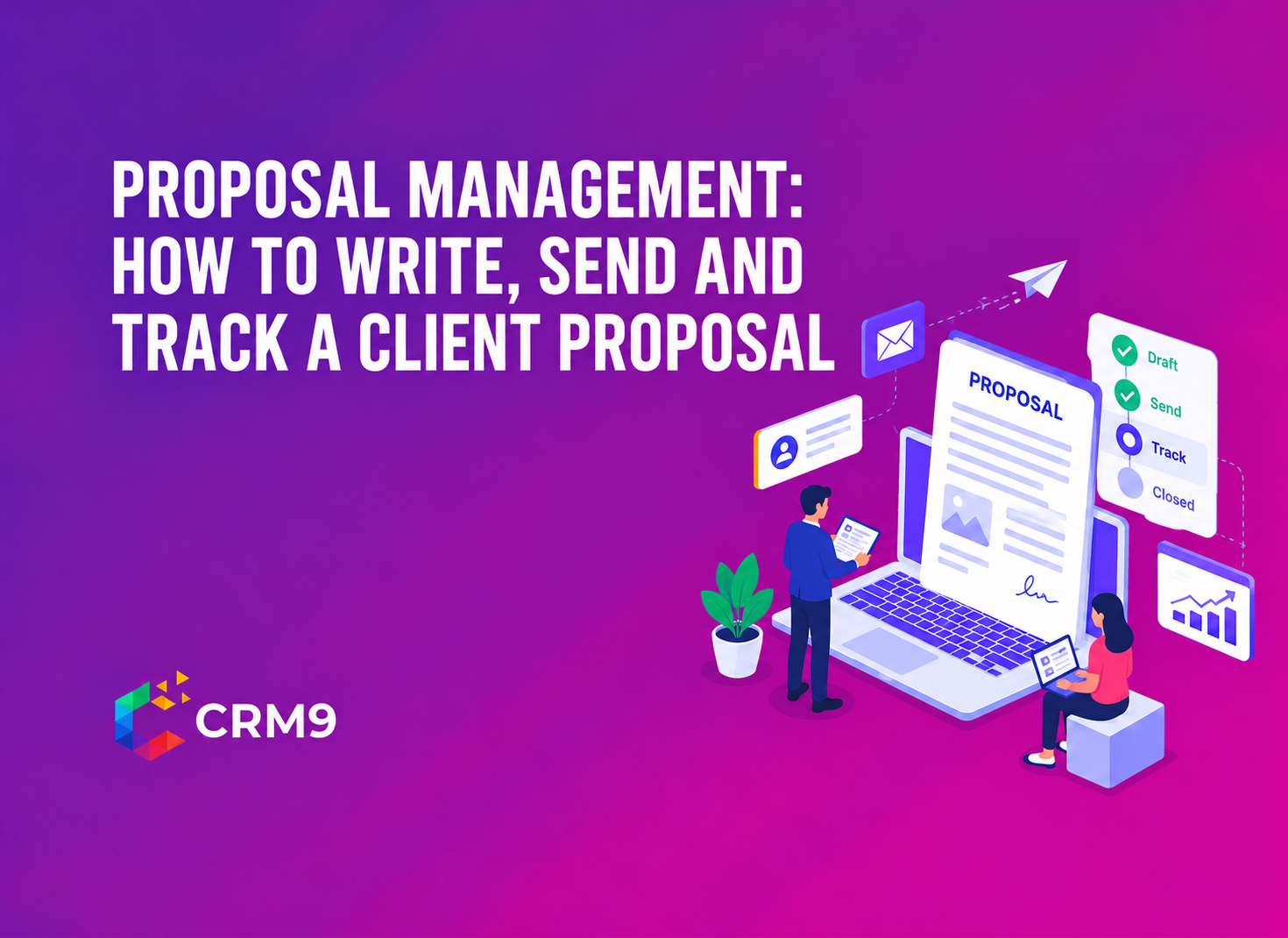
Start with a small set of statuses that everyone uses. Each proposal should sit in one status at a time, with a date beside it.
| Status | What it means | Next action |
| Draft | Being written or reviewed internally | Finish, check the numbers, and get approval |
| Sent | Delivered to the client | Confirm receipt and set a follow-up date |
| Under discussion | The client has questions or changes | Answer quickly and record any revised terms |
| Accepted | The client has said yes | Prepare the contract and the first invoice |
| Declined | The client has said no | Ask for the reason and note it |
For a handful of open proposals, a simple to-do list works well: one line per proposal, a named owner and a follow-up date. When the list grows past ten or so, move to a tool that shows status, owner and date in one view.
Then set a follow-up email. A common pattern is a short message two or three days after sending, a call about a week later, and a final check-in before the offer expires. Adjust it to your sales cycle, and make each message useful, for example by answering a question the client raised. Treating each follow-up as a tracked task is the same habit described in our task management guide.
Record every client reply against the proposal. A short note such as “asked for a quarterly payment option” prevents surprises later. If your tool shows that the client opened the proposal several times without replying, that is a sign to call, not to send another email.
Why Should a Proposal Connect to Contracts and Client Records?
A proposal is the start of a paper trail, not a standalone file. When the client accepts, the same details should flow into the agreement and the first invoice. Retyping them invites errors, such as a price that differs between two documents. Contract management begins where the proposal ends. Treat the accepted proposal as the source for scope, price, and timeline, and carry those terms into the signed agreement.
Billing follows the same logic. When invoices and estimate records link to the accepted proposal, the amount you invoice matches the amount you quoted. It also makes later questions easy to answer, because the proposal, the contract, and the invoice sit together. Ongoing work needs one more link. Keep the proposal in the client’s record, so the team can see what was promised.
For retainers and recurring services, our guide on subscription management shows how to track renewals and payments after the first project.
When Is It Time to Use Proposal Management Software?
You can run proposals from documents and a spreadsheet for a while. Four signs suggest that it is time to change.
- You have more proposals open than anyone can remember.
- Different people send different versions, because nobody knows which one is current.
- Follow-ups slip, and you find out only when the client goes quiet.
- Writing each proposal takes hours, because you start from a blank page.
Proposal management software keeps drafts, versions, statuses, and follow-ups in one place. Look for a tool that connects proposals to client records and billing. A tool that stands alone only moves the scattered files to a new location. Whichever tool you choose, ask your team to use it for every proposal for a month. A tool that only some people use creates the same gaps you wanted to close.
Conclusion
Good proposal management comes down to three habits. Writing a proposal is only the first, so build it around the client’s problem. Track every proposal with a status, an owner, and a next date. Carry the accepted terms into the contract and the invoice without retyping them. Start with the proposals you have open today: list them, assign owners, and set a follow-up date for each.
Frequently Asked Questions
It is the process of creating, sending, tracking, and following up on proposals until the client decides.
A cover page, summary, scope, timeline, pricing, proof of past work, and a clear next step.
Many sales teams follow up after two or three days and again about a week later, adjusting for the client’s decision cycle.
Not always, but it helps once several proposals are open at the same time and follow-ups start to slip.
A quote lists prices for a defined service, while a proposal also explains the problem, the approach, the scope, and the terms.