A sales team can contact dozens of prospects every day and still struggle to meet its targets. The problem is not always the number of calls or emails. Sometimes, the team lacks a clear process for qualifying leads, following up, and moving prospects toward a purchase.
Inside sales helps businesses bring structure to these activities. Representatives connect with prospects remotely, understand their requirements, demonstrate products, and guide potential customers through the buying process. With the right strategy and tools, teams can manage more conversations without losing track of individual opportunities.
What Is Inside Sales and How Does It Work?
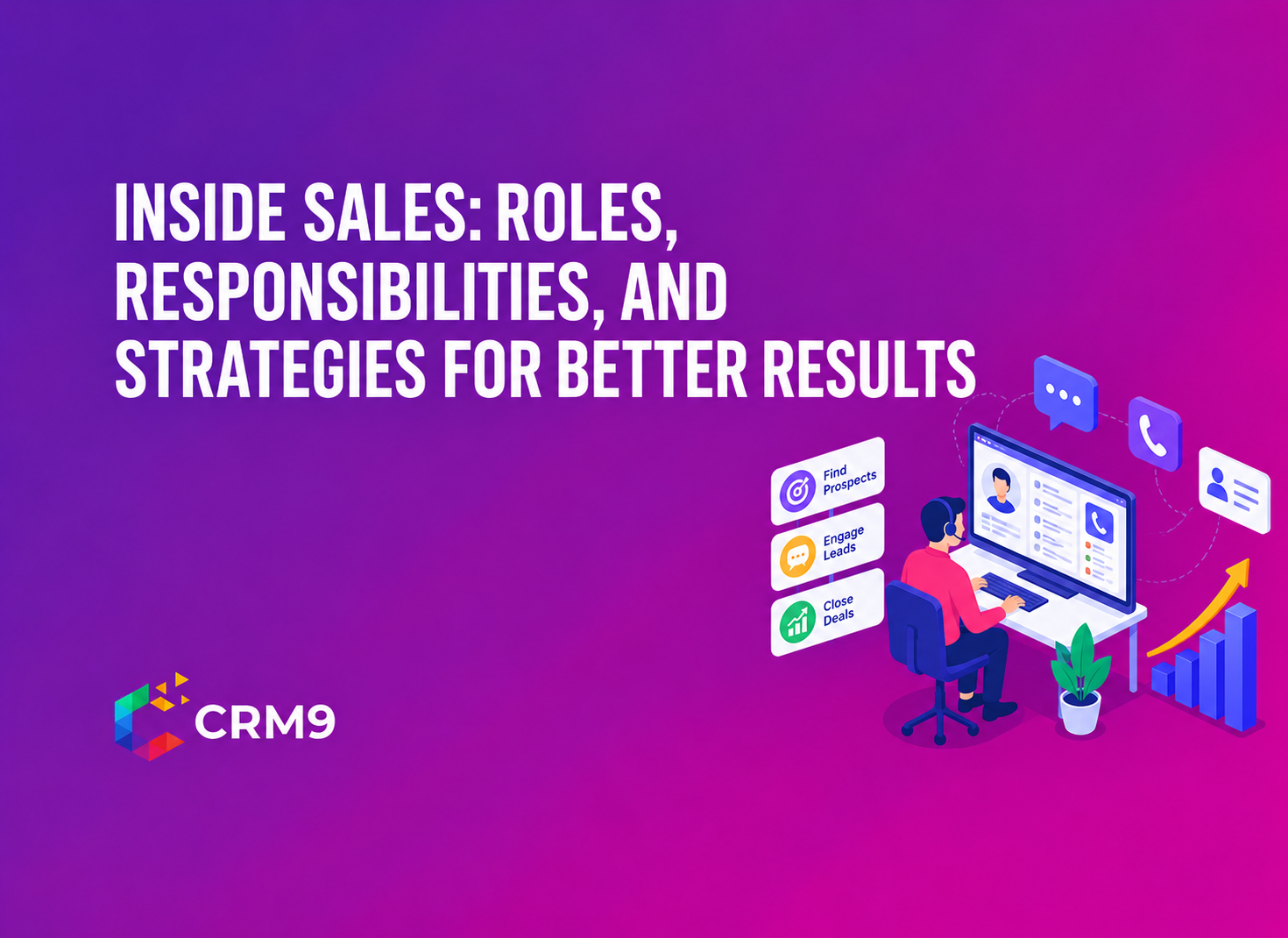
Inside sales refers to a sales strategy where representatives engage with prospects and customers from a remote location. This approach typically involves utilizing various communication methods such as phone calls, emails, video meetings, and messaging platforms. Through these digital communication tools, inside sales teams work to generate leads, explain products, address customer inquiries, and ultimately close deals.
Unlike traditional methods that depend on in-person meetings, inside sales allows representatives to manage customer conversations from an office or another remote location. This approach is common in SaaS, technology, professional services, and business-to-business sales.
The process generally follows these steps:
- Lead generation: Identify potential customers through website enquiries, marketing campaigns, referrals, and other sources.
- Lead qualification: Determine whether a prospect has a relevant need, suitable budget, decision-making authority, and a realistic buying timeline.
- Initial contact: Reach out through a suitable communication channel and introduce the product or service.
- Needs assessment: Ask questions to understand the prospect’s challenges, expectations, and priorities.
- Product presentation: Explain relevant features, benefits, pricing, and potential use cases.
- Follow-up and negotiation: Address objections, share additional information, and discuss commercial terms.
- Deal closure: Confirm the customer’s decision and coordinate the next steps.
The exact process varies by business. A low-cost subscription product may require a short sales cycle, while an enterprise solution may involve multiple discussions and approvals. The main objective is to make every interaction useful and move qualified prospects closer to a decision.
What Does an Inside Sales Executive Do Every Day?
An inside sales executive manages conversations with potential customers and helps turn qualified enquiries into business opportunities. Daily responsibilities depend on the product, target audience, and sales cycle.
Common activities include:
- Contacting prospects: Making calls, sending emails, and responding to enquiries from interested buyers.
- Understanding customer needs: Asking relevant questions instead of giving every prospect the same product pitch.
- Demonstrating solutions: Explaining how a product works and connecting its capabilities to specific customer problems.
- Managing follow-ups: Reconnecting with prospects at appropriate times and sharing information that supports their decision.
- Updating sales records: Recording conversations, customer requirements, meeting outcomes, and agreed next steps.
- Handling objections: Addressing concerns about price, implementation, product suitability, or competing priorities.
- Coordinating with internal teams: Working with marketing, customer support, and account management when a prospect needs additional assistance.
- Meeting sales targets: Tracking activity and revenue goals while maintaining the quality of customer interactions.
A typical day may begin with reviewing pending follow-ups and prioritising qualified leads. The representative then contacts prospects, attends scheduled meetings, prepares proposals, and updates the sales pipeline.
However, effective inside sales is not simply about completing a high number of calls. Representatives must also understand which prospects deserve attention and what each person needs to move forward.
How Can CRM Software Support Inside Sales Teams?
Managing prospects through separate spreadsheets, email threads, and personal notes can make sales follow-ups difficult to coordinate. Customer relationship management (CRM) software brings important sales information into a shared system.
A CRM platform can support inside sales activities through capabilities such as:
- Lead management: Organise enquiries, record lead details, and track prospects as they progress through the pipeline.
- Client management: Maintain customer information and interaction history so representatives can understand previous conversations.
- Task management: Assign follow-up activities, set deadlines, and make responsibilities clearer across the team.
- Proposal management: Prepare and manage proposals with better visibility into outstanding commercial discussions.
- Custom dashboards: Review relevant sales information and identify opportunities that need attention.
Consider a representative who completes a product demonstration but forgets to contact the prospect the following week. A structured CRM process can help the representative record the meeting, assign a follow-up task, and review the opportunity later.
What Are the Key Inside Sales Roles and Responsibilities?
Inside sales teams may have different job titles depending on their size and structure. In smaller businesses, one representative may manage the entire process. Larger organisations often divide responsibilities among specialised roles.
Inside Sales Representative
An inside sales representative communicates directly with prospects and customers. Their responsibilities include qualifying enquiries, explaining solutions, addressing objections, maintaining customer relationships, and progressing opportunities toward a sale.
Inside Sales Executive
An inside sales executive usually manages day-to-day selling activities, including prospect outreach, product presentations, follow-ups, negotiations, and sales reporting. The exact scope depends on the company’s expectations and experience requirements.
Sales Development Representative
A sales development representative (SDR) generally focuses on identifying prospects, initiating conversations, and qualifying potential opportunities. The role often supports account executives by ensuring that sales-ready leads enter the pipeline.
Account Executive
An account executive typically manages qualified opportunities through product demonstrations, commercial discussions, proposal preparation, and deal closure. Some organisations combine this role with prospecting responsibilities.
Inside Sales Manager
An inside sales manager oversees team performance, assigns targets, reviews pipelines, coaches representatives, and identifies gaps in the sales process. Managers also use performance data to improve forecasting and team productivity.
What Skills Does an Inside Sales Representative Need?
Successful representatives combine communication skills with research, organisation, and commercial awareness. They must understand customer requirements while keeping sales activities moving.
The following skills are particularly valuable.
- Clear communication: Representatives should explain products in simple language, ask relevant questions, and listen carefully to customer responses.
- Active listening: Understanding a prospect’s concerns helps representatives recommend suitable solutions instead of relying on a generic pitch.
- Product knowledge: A strong understanding of product features, limitations, pricing, and use cases allows representatives to answer questions confidently.
- Lead qualification: Representatives must recognise which prospects are likely to benefit from the solution and which need further nurturing.
- Negotiation and objection handling: Customers may question pricing, request additional features, or delay their decisions. Representatives need to respond with relevant information rather than pressure.
- Time management: Managing multiple prospects requires organised calendars, clear priorities, and consistent follow-ups.
- CRM proficiency: Familiarity with customer relationship management software helps representatives record interactions, track opportunities, and maintain accurate customer information.
- Adaptability: Different prospects have different expectations. Representatives should adjust their communication style and product explanations accordingly.
How Can You Build an Effective Inside Sales Strategy?
A successful inside sales strategy gives representatives a repeatable process without making customer conversations feel scripted. Businesses can improve their approach through the following practices.
1. Define Your Ideal Customer
Identify the industries, company sizes, roles, and business challenges that match your product. A clear ideal customer profile helps representatives focus on prospects most likely to need the solution.
2. Create a Lead Qualification Process
Establish clear criteria for deciding whether a lead is worth pursuing. These may include the prospect’s requirements, budget, decision-making authority, urgency, and expected timeline. Consistent qualification keeps representatives from spending too much time on enquiries unlikely to convert.
3. Personalise Outreach
Research the prospect before making contact. Use relevant details about their business, industry, or stated requirements to make the conversation more meaningful. For example, instead of sending a generic product introduction, explain how a particular capability could address a challenge the prospect has mentioned.
4. Plan Follow-Ups Carefully
Not every prospect will respond to the first call or email. Create a follow-up schedule based on the customer’s interest, buying stage, and preferred communication channel. Each follow-up should provide a reason to reconnect, such as answering a question, sharing a relevant case study, or clarifying a product feature.
5. Review the Sales Pipeline Regularly
Track where opportunities stand, which actions are pending, and which deals have remained inactive for too long. Regular reviews help managers identify bottlenecks and provide timely support.
6. Improve Through Performance Data
Review conversion rates, response rates, sales cycle length, and lost-deal reasons. Use these findings to test changes in messaging, qualification criteria, and follow-up timing. Avoid changing several parts of the process at once. Smaller tests make it easier to identify which adjustments improve results.
Which Inside Sales Metrics Should Managers Track?
Sales managers need more than activity counts to understand team performance. A representative may make many calls without generating qualified opportunities, while another may close fewer but more valuable deals. Track a balanced set of metrics that reflects both activity and business outcomes.
| Metric | What it measures | Why it matters |
| Lead response time | Time taken to respond to an enquiry | Helps assess how quickly the team engages interested prospects |
| Contact rate | Share of outreach attempts that reach prospects | Indicates whether contact methods and timing are effective |
| Lead-to-opportunity conversion | Share of leads that become qualified opportunities | Helps evaluate lead quality and qualification |
| Opportunity win rate | Share of opportunities that result in sales | Shows how effectively the team progresses qualified deals |
| Average sales cycle | Time taken to close a deal | Helps identify delays and improve forecasting |
| Average deal value | Average revenue generated per closed deal | Provides insight into deal size and sales performance |
| Follow-up completion | Share of planned follow-ups completed | Highlights consistency in sales execution |
Review these metrics over time and compare them with the team’s targets. Results may vary by product, customer segment, and sales cycle, so avoid using a single benchmark for every team.
What Challenges Do Inside Sales Teams Face?
Inside sales teams often work with large lead volumes, multiple communication channels, and demanding targets. Without a consistent process, these pressures can reduce productivity and affect customer experience.
- Low-quality leads: Representatives may spend time contacting prospects who do not fit the target audience. Improve lead sources and qualification criteria to prioritise relevant enquiries.
- Inconsistent follow-ups: Missed tasks and incomplete records can cause promising opportunities to go inactive. Use clear ownership, task reminders, and regular pipeline reviews.
- Generic communication: Repeated scripts may fail to address individual customer needs. Encourage representatives to research prospects and adapt their conversations.
- Limited visibility: Managers may struggle to understand deal progress when customer information is scattered across different tools. Maintain centralised records and standardise sales stages.
- Difficulty meeting targets: High activity levels do not always translate into revenue. Review conversion data, coach representatives, and identify the specific stage where prospects drop out.
Addressing these challenges requires a combination of clear processes, regular coaching, suitable technology, and realistic performance expectations.
Note: Larger companies often split inside sales into two stages: one group finds and qualifies interested buyers, and another group closes the deal. Smaller companies usually let the same people handle both stages.
Conclusion
Inside sales gives businesses a structured way to connect with prospects, understand their needs, and manage opportunities through remote communication. Its effectiveness depends on more than call volume. Representatives need strong communication skills, clear qualification criteria, consistent follow-ups, and accurate sales records. Businesses can strengthen their approach by defining an ideal customer profile, reviewing pipeline activity, measuring meaningful performance indicators, and using CRM software to organise sales work. When the process is clear and customer-focused, inside sales teams can manage opportunities more consistently and make better use of their time.
Related Reads
- Top Emerging Sales Trends for 2026: What’s Changing in Sales Management
- What Is a CRM Platform? Features, Benefits, Types and How It Works
- What Is a Sales Budget? Purpose, Format, and How to Build One
- Sales Tracking Metrics: What to Track and Why They Matter
- Sales Organization Structure: How It Should Evolve as Your Team Grows
- To-Do List or Task Management Software? When a Simple List Stops Being Enough
Frequently Asked Questions
An inside sales executive contacts prospects remotely, qualifies leads, explains products, manages follow-ups, addresses objections, and works toward sales targets.
Important skills include communication, active listening, product knowledge, lead qualification, negotiation, time management, and CRM proficiency.
Define your ideal customer, qualify leads consistently, personalise outreach, plan follow-ups, review pipeline activity, and use performance data to refine your approach.
CRM software helps representatives organise lead and client information, record interactions, manage follow-up tasks, track opportunities, and monitor sales progress.
Key metrics include lead response time, contact rate, lead-to-opportunity conversion, win rate, average sales cycle, average deal value, and follow-up completion.